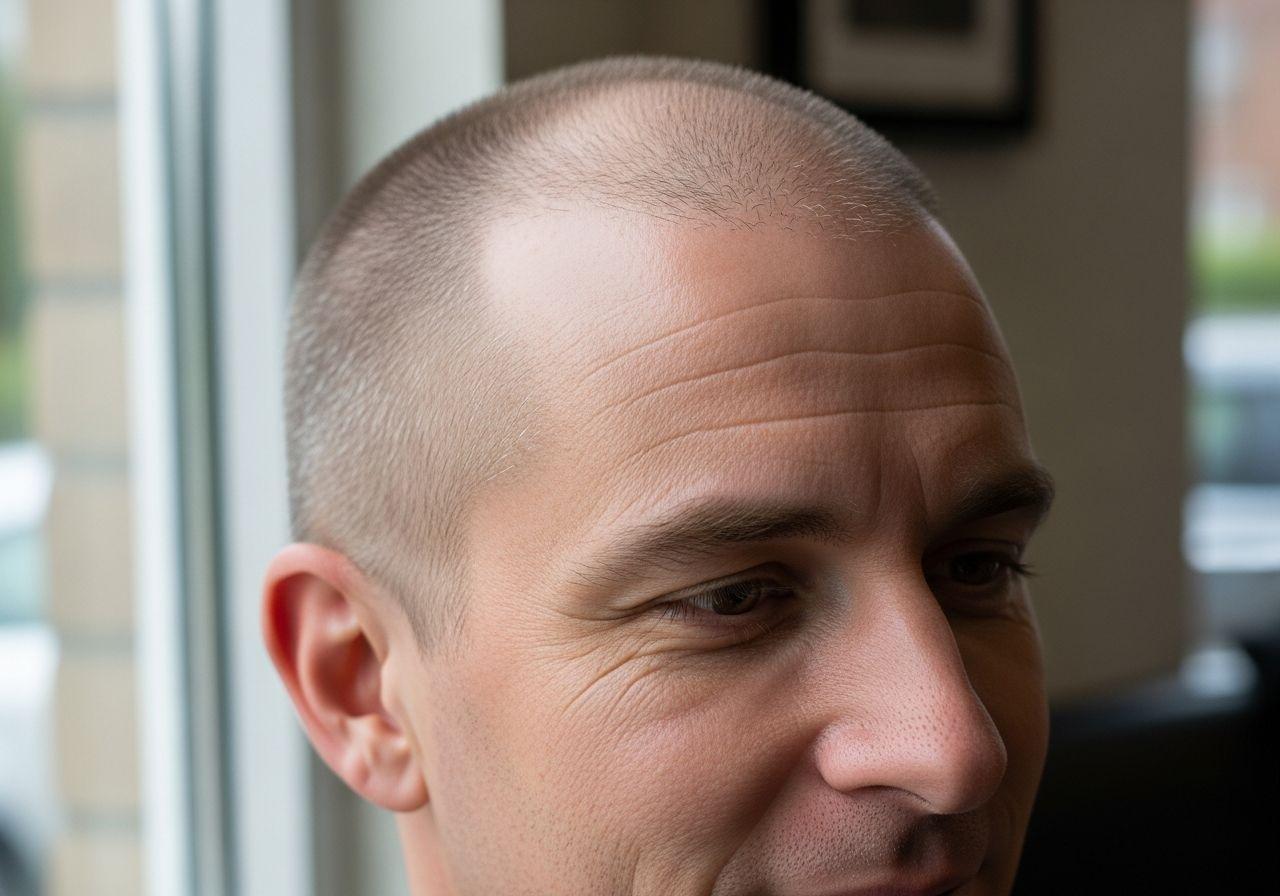


Yes, scalp micropigmentation can work for diffuse thinning when the goal is to reduce the contrast between your scalp and the hair you still have. It does not regrow hair or stop hair loss. Instead, I place carefully matched pigment between existing hairs to create the appearance of greater density.
What does SMP do for diffuse thinning?
When thinning is spread across the crown, part line or much of the scalp, the skin underneath becomes more visible. That contrast can make the hair appear thinner than it may look from the side or back. Scalp micropigmentation, or SMP, softens that contrast by adding tiny pigment impressions between your existing hairs.
For this pattern, I use a density approach rather than treating the scalp as though you have a completely shaved head. The aim is not to draw a new hairline or make every area equally dark. The aim is to work with your natural pattern and make the visible scalp less prominent.
The result is usually a subtle visual improvement. You should still expect to see your natural hair and scalp up close. SMP for thinning hair on top is most successful when the target is believable density, not a dramatic change that looks separate from your own hair.
You can read more about the treatment on my scalp micropigmentation page.
Can SMP work if the thinning is all over?
It can, but suitability depends on how much hair remains, how evenly the thinning is distributed and how you normally wear your hair. Diffuse thinning does not always have a clear boundary, so I assess the whole scalp rather than focusing only on one visible area.
If you have enough existing hair for the pigment to blend into, density SMP may help the scalp look less exposed. Some clients can continue wearing their hair longer, depending on the pattern and extent of thinning. If density is very limited, a shorter style may blend the work more naturally.
Hair color, skin tone, hair length and the direction of your growth all influence the design. Gray hair can also be considered. When hair is kept short, the root area may provide a useful visual connection between the pigment and the hair, even though the longer strand appears gray.
I do not promise that SMP will suit every case of diffuse hair loss. During consultation, I look at your scalp in person, discuss the way you part and style your hair, and explain what I believe is realistic before any treatment begins.
Will SMP make my hair look thicker?
SMP can make thinning hair look fuller by reducing the pale or shiny appearance of the scalp between strands. It does not add physical volume, increase the number of follicles or change the thickness of each hair. The improvement is cosmetic, created by making the gaps between hairs less noticeable.
This distinction matters when you are comparing photographs. A client with a defined bald patch may show a more obvious before and after contrast than someone with gradual thinning across the entire scalp. With diffuse thinning, the change is often more blended because the pigment is placed among hairs that are still present.
Photos are useful, but they cannot predict your exact result. Lighting, hair length, parting, camera angle and the stage of hair loss all affect how thinning appears. I prefer to assess your own scalp rather than suggest that another person's result will be identical to yours.
What happens during a density SMP treatment?
I begin by discussing your concerns, hair-loss pattern and preferred hairstyle. We then consider the pigment tone, the areas that need the most visual coverage and how softly the treatment should transition into untreated skin. I use anaesthetic during the procedure to help keep you comfortable.
Density work is built gradually. Starting conservatively gives me the opportunity to see how the pigment settles and allows us to assess the balance between your existing hair and the treated areas. Adding too much too quickly can make diffuse thinning look heavier than intended, so restraint is important.
Your scalp needs time to heal between appointments. I will give you individual aftercare instructions. In general, you should plan for a short period of protecting the treated area from water, shampoo, sweating and direct sun, followed by a gradual return to normal grooming while the pigment settles.
Healing and color settling take time. The first appearance is not the final appearance, and I assess the healed work before deciding whether any additional density or refinement is appropriate.
What are the limits of SMP for diffuse hair loss?
SMP is camouflage, not a medical treatment for the cause of hair loss. It does not regrow hair, prevent future thinning or affect the hair follicles. If your loss is continuing, the pattern may change after treatment, so that possibility should be part of your decision.
You should also tell me about scalp concerns and your medical history during consultation. Active irritation or a flare of a scalp condition needs careful consideration before treatment. If you have a history of unusual or raised scarring, discuss that with a suitable medical professional and with me before proceeding.
My priority is a result that remains believable as your hair and preferences change. That may mean treating less area, choosing a lighter density, adjusting your hairstyle or deciding that SMP is not the right option at this stage.
SMP can also be used for selected areas of scalp scarring. If that is part of your concern, see my page about scalp scar camouflage with SMP.
How do I decide whether it is right for me?
Bring your questions, your usual hairstyle and an honest description of what you want to improve. Tell me whether your thinning is stable or changing, whether you prefer to keep your hair long and which areas you notice most in everyday lighting.
I will explain what density treatment can and cannot do for your particular pattern. My role is not to make diffuse hair loss disappear. It is to create a carefully matched visual reduction in scalp contrast while respecting your natural hairline, color and proportions.
Rebel Aesthetic is in Philadelphia, Pennsylvania, and I offer consultations so we can assess your scalp rather than rely on a photograph alone. You can get in touch to arrange a consultation and discuss your options without pressure.
If you would like to talk it through, I am happy to arrange a consultation.
Frequently asked questions
Can I keep my hair long after density SMP?
Sometimes. Whether longer hair blends well depends on the amount and pattern of thinning, your hair texture and how visible the scalp is through the hair. Some clients maintain length, while others get a more natural blend by wearing the hair shorter. I assess your preferred style before recommending an approach.
Does diffuse SMP look like a shaved head treatment?
Not necessarily. A density treatment is designed to blend pigment between existing hairs, rather than recreate a complete shaved hairstyle across bare skin. The color, placement and density are adjusted to your own hair. The finished effect should support the hair you have, not look like a separate painted hairline.
Can SMP make ongoing hair loss look uneven later?
It can if the surrounding hair changes significantly after treatment. SMP does not stop the biological process behind hair loss, so future thinning may alter the balance between treated and untreated areas. I discuss this possibility during consultation and can plan conservatively when your pattern is still changing.
Is SMP suitable for a widening part line?
A widening part line can sometimes be treated as part of a broader density plan. I need to assess how much hair remains around the part, whether the thinning extends into the crown and how you usually wear your hair. The best result comes from blending the part into nearby areas rather than creating an obvious stripe.
Can women have SMP for diffuse hair loss?
Yes. SMP can be used for female-pattern thinning and other types of diffuse loss when the goal is to reduce visible scalp. The treatment is planned around the individual hair pattern and styling habits, rather than applying a standard shaved-head design. I assess each client’s suitability in person.
Will pigment show through if my hair is fine?
The purpose of density SMP is to place pigment among the hairs, but the blend depends on your hair color, skin tone, hair length and remaining density. Fine hair and very exposed scalp require careful color and placement choices. I explain the likely level of visibility before treatment begins.
How long can SMP results last?
SMP gradually fades rather than disappearing at a predictable fixed time. Sun exposure, skin type, oiliness, aftercare and other individual factors affect how quickly this happens. Many clients consider maintenance when the color has softened noticeably. I can discuss long-term care and touch-up planning during consultation.