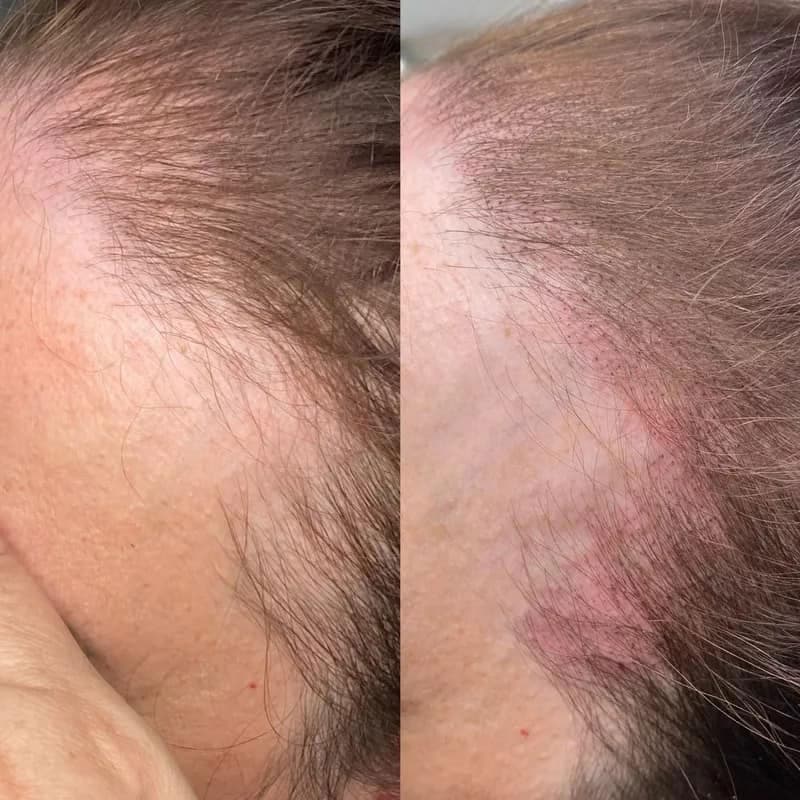

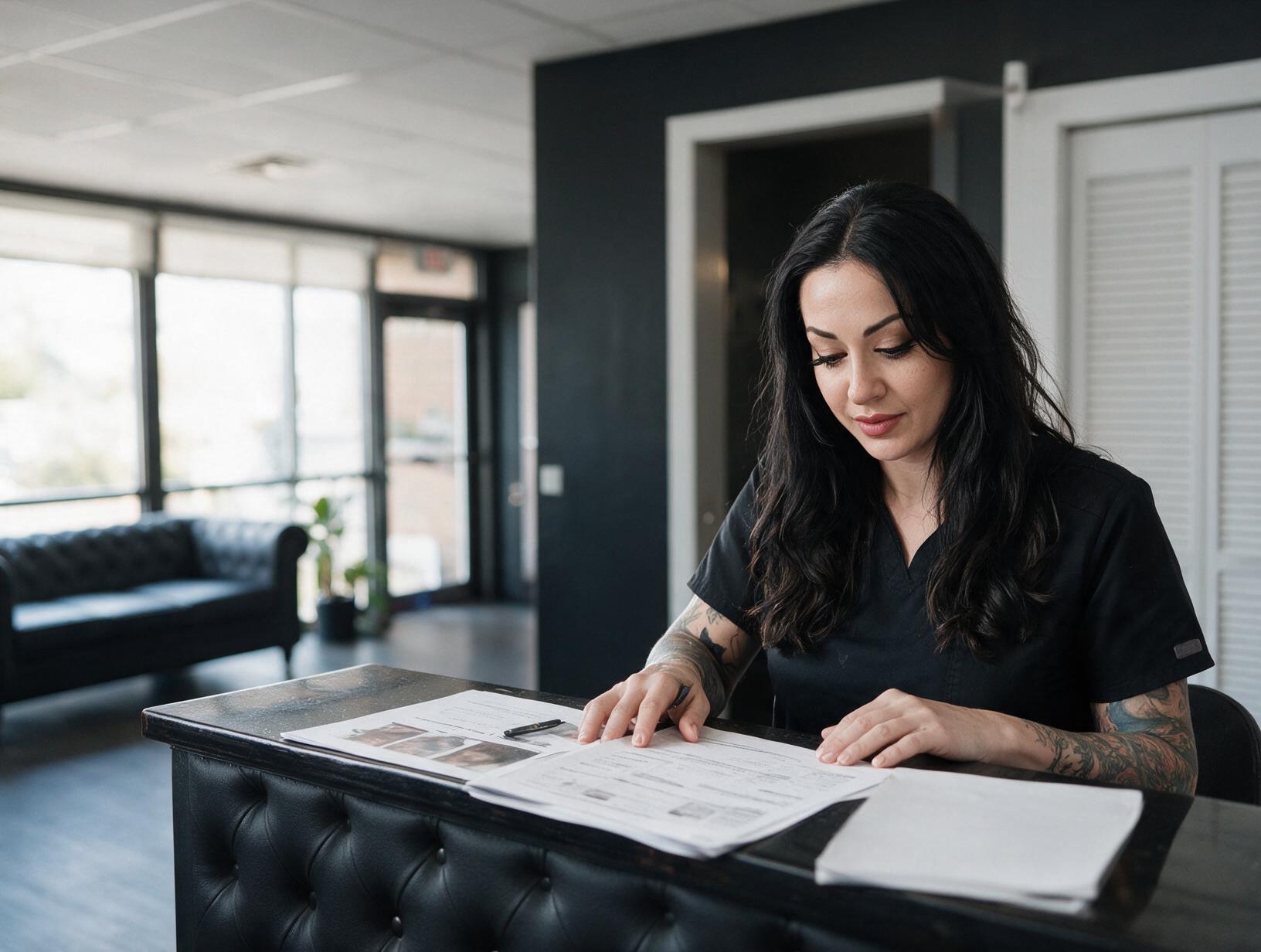

Scalp micropigmentation can look natural on darker and African American skin tones when the practitioner matches the pigment to your follicle color, controls placement and designs density carefully. The dots should resemble visible follicles or soft shadow, not a solid cap. Your healed result depends on your skin, hair and pattern of thinning.
What should SMP look like on African American skin?
When I perform female African American scalp micropigmentation, I am not trying to make the scalp look painted. I am creating tiny, carefully spaced impressions that reduce the contrast between visible scalp and the surrounding hair. The finished effect may be subtle, such as a fuller-looking part, or more noticeable where thinning is extensive.
Darker skin does not mean the result has to look overly dark, and I plan pigment and dot size to keep the healed tone natural. Pigment selection is based on your current hair follicle color, not simply on your skin tone. I also consider your natural hair color, existing density, complexion and the area being treated.
Some scalp showing through the hair is normal. That is an important expectation for women considering African American scalp micropigmentation. SMP creates the visual impression of greater fullness. It does not grow hair, alter natural growth or change the hair follicles that are already there.
Why does pigment choice matter on darker skin?
Color behaves differently depending on the skin beneath it, the depth of placement and how the pigment settles during healing. A skilled practitioner should avoid treating every client with the same formula or density. The aim is a soft, believable match that works with your hair in ordinary light, not a shade that looks correct only during the appointment.
SMP is a cosmetic tattoo process, but it is not the same as applying traditional tattoo ink deeply. The pigment is placed in the epidermal and upper dermal layers. This controlled placement helps keep individual impressions defined and reduces the risk of noticeable spreading.
Placement matters just as much as color. Dots that are too large, too close together or placed too deeply can heal unevenly or look blotchy. On darker skin tones, careful observation during the procedure and a staged approach are especially important because the healed appearance is what matters, not only the immediate result.
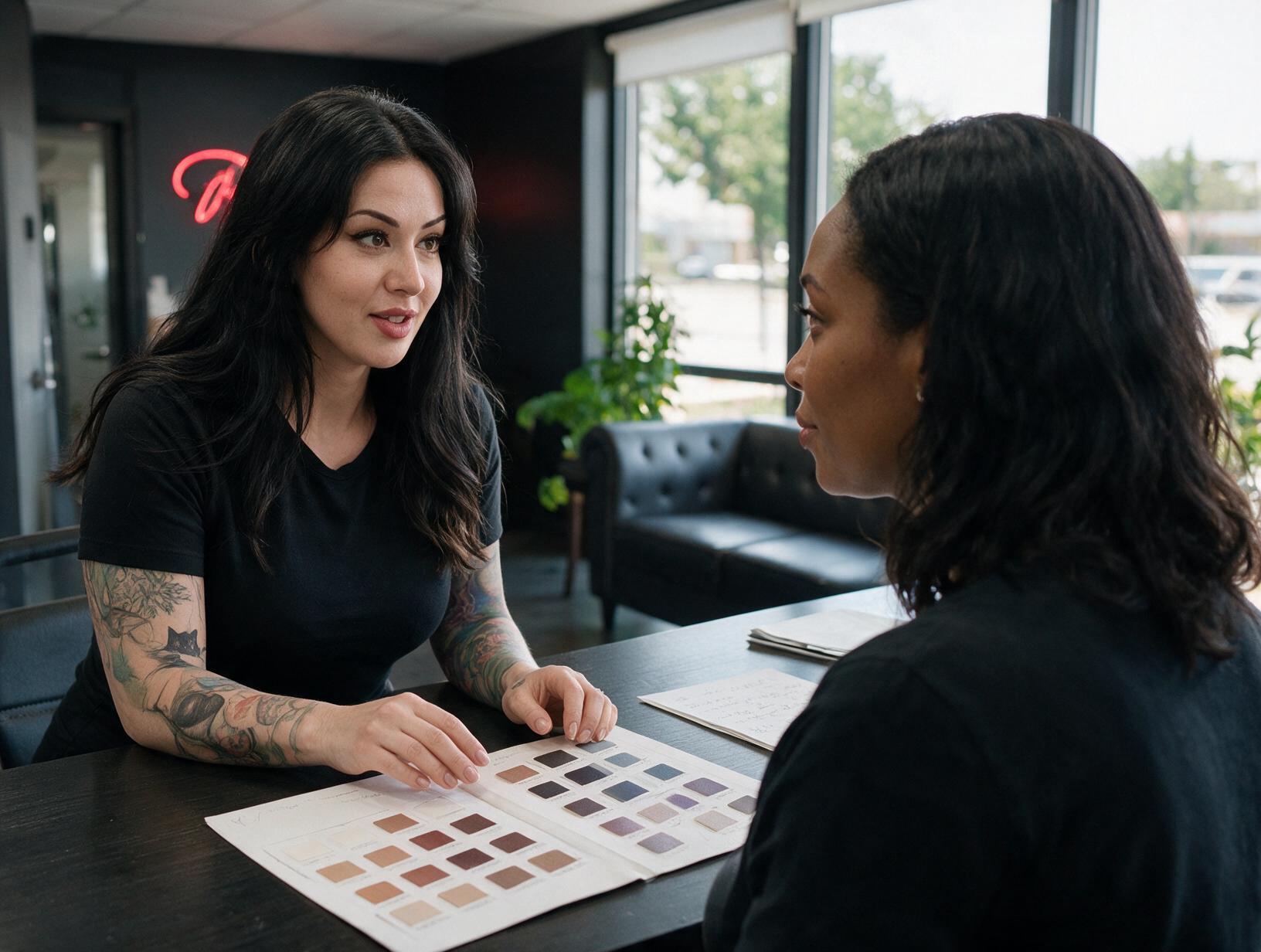
Can women with darker skin have density SMP without shaving?
Yes, female SMP can be designed around existing hair. For women with diffuse thinning, a widening part or reduced coverage near the crown, I work between and beneath the hair that remains. The goal is usually to soften the contrast between the scalp and hair while preserving your preferred length and styling options.
Before treatment, I look at how you normally wear your hair. Your part, ponytail, braids, twists or other styles can change which areas are visible. We discuss the treatment zones and the amount of density that would look consistent with your natural hair, rather than applying an even block of color across the scalp.
If hair loss is suspected to be female pattern hair loss, it is sensible to investigate the cause first. Blood tests may be needed to rule out other diseases, metabolic conditions or hormone imbalances that can produce similar-looking thinning. SMP conceals the appearance of hair loss, but it does not diagnose or treat its underlying cause.
How do I judge whether a practitioner is suitable?
Look closely at healed work, not only freshly completed photographs. I recommend checking examples involving women, darker skin tones and a similar type of thinning to yours. Pay particular attention to the hairline. An unnatural hairline can make an otherwise well-executed treatment noticeable, so it should be designed around facial structure, age and your existing hair pattern.
You should also ask about licensing, training, hygiene and how allergies are handled. A qualified SMP practitioner should be a licensed cosmetic or body artist, ideally registered with a recognised professional body, and should carry appropriate bloodborne pathogen certification. Tell your practitioner about every allergy and relevant scalp condition before treatment.
At Rebel Aesthetic in Philadelphia, I am AAM certified, a platinum level AAM trainer and instructor, New Jersey certified and insured. My background also includes an associate degree in education and a bachelor degree in psychology. You can review my scalp micropigmentation results and use the consultation to ask how I would approach your pattern of thinning.
What happens before and after treatment?
Before your appointment, wash your hair and scalp as directed. During the consultation and preparation, I mark the treatment areas, discuss the hairline or density plan, match the pigment to your follicle color and use numbing medicine. A complete course commonly involves several sessions spaced a few weeks apart, allowing the skin to settle and the result to be assessed progressively.
After each session, keep the scalp dry during the initial healing period. A shower cap can help while bathing. Avoid washing the treated area, heavy exercise, steam rooms and hot showers that make you sweat. Avoid direct sun exposure on the scalp for several days. Follow the aftercare instructions I give you, which may include a thin petrolatum-based moisturizer such as Aquaphor or Vaseline twice daily to help prevent scab formation.
Once healed, protect the scalp from sun with broad-spectrum sunscreen. Pigment is intended to be permanent, although it can fade over time and may eventually need a refresh. Laser removal is possible later, so a conservative, well-planned design from the beginning is important.
If you would like more background, my guide to scalp micropigmentation explains the process and suitable concerns, while the page on what women in the US pay for SMP explains why pricing varies. You can get in touch with me to arrange a consultation.
If you would like to talk it through, you are welcome to book a consultation.
Frequently asked questions
Will SMP make my scalp look lighter or darker after healing?
Healing can temporarily change how strong the pigment appears, and the settled color may look different from the appointment day. I assess the healed result before adding more density or making adjustments. Your skin, hair color, treatment area and aftercare all influence the final appearance, so a personal assessment is important.
Can African American women have SMP with curly or coily hair?
Yes. Curly or coily hair does not prevent treatment. I plan around the way your strands grow, your usual parting and the amount of scalp that shows through. The design should support your natural texture and styling rather than imitate a straight hair pattern that would not match your appearance.
Is darker skin more likely to develop keloids after SMP?
Keloid risk relates to how your skin forms scars, not simply to whether your complexion is dark. If you are prone to large keloid scars, SMP should generally be avoided. Tell me about previous scars during consultation so we can discuss whether treatment is appropriate before proceeding.
Can SMP cover a scalp scar on darker skin?
It may camouflage the contrast of a scalp scar, but scar tissue can accept pigment differently from surrounding skin. The texture and color may therefore require a separate plan and realistic expectations. I assess the scar in person, including whether it is fully healed, before recommending treatment for that area.
Will I need to shave my head for female SMP?
Not necessarily. Female density treatment is often planned around existing hair, so shaving is not automatically required. The best approach depends on your thinning pattern, hair length, styling and the areas you want to soften. We discuss those practical details before deciding how the treatment will be carried out.