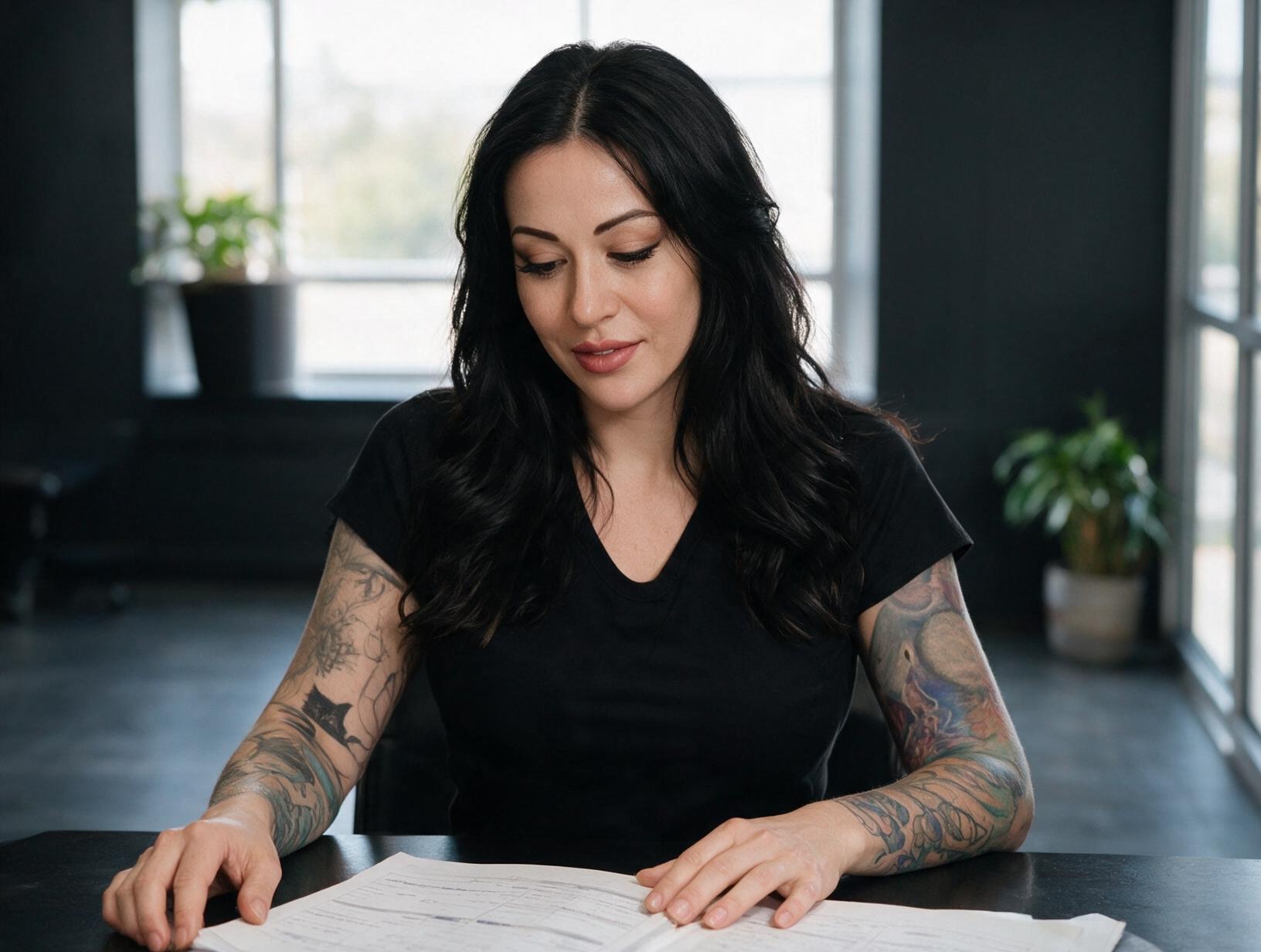

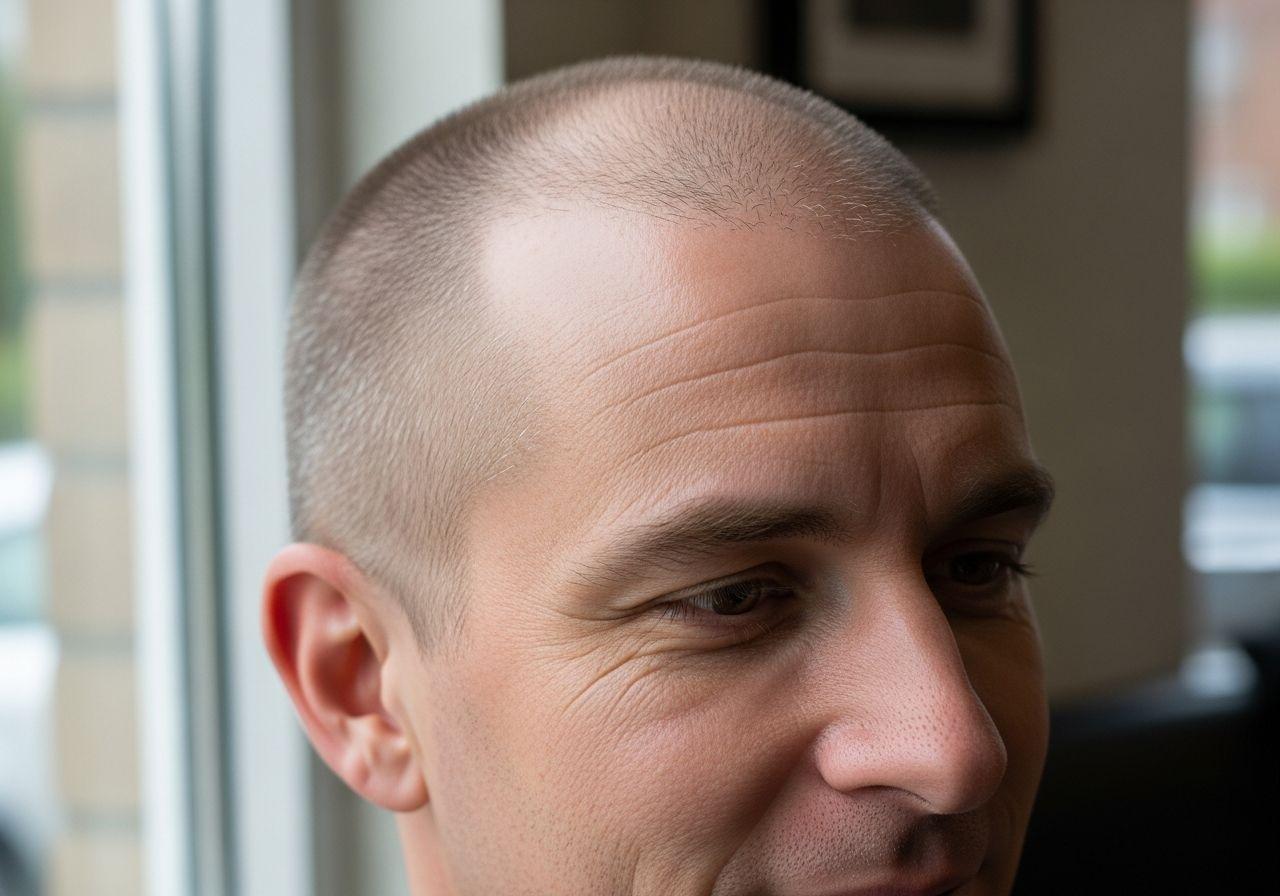

Usually, yes, if you are having SMP for a fully shaved-head look. A close shave gives me a consistent surface for placing follicle-like dots and matching the result to your stubble. However, you may not need to shave for density SMP, female SMP, or some scar treatments. I assess that with you first.
When should you shave before SMP?
If your goal is the appearance of a closely shaved head, I generally want the scalp shaved before treatment. This includes the shaved SMP approach used to recreate the visual effect of short, even stubble across areas affected by hair loss.
Shaving lets me assess the complete scalp, including the hairline, temples, crown and any areas where natural hair has become very fine. It also gives me a consistent background for placing small pigment impressions. Scalp micropigmentation is a non-surgical cosmetic tattoo treatment, so the result depends on careful placement, scale, spacing and color matching rather than on growing new hair.
You do not need to arrive with a shaved head unless I have asked you to do so. During your consultation, I can explain the hair length that best suits your planned result and your usual grooming routine. If you are unsure whether you want to commit to a shaved appearance, that conversation matters before we begin.
Do you need to shave for every type of SMP?
No. A full shave is not automatically needed for every scalp micropigmentation treatment. The right preparation depends on what we are trying to create, and I explain it at your consultation.
For male density SMP, I work between existing hairs to make thinning areas look fuller. Shaving is not usually the aim here, because the pigment needs to blend with the hair you keep. The aim is different from a fully shaved result, so I assess your current density, hairline and pattern before deciding how you should prepare.
Female SMP can also be performed with existing hair. The treatment may be used to improve the appearance of visible scalp through a parting or thinning area, rather than to imitate a shaved head. In that situation, keeping your hair in place can help me see where density needs to be addressed.
Scar work is assessed individually too. The area, surrounding hair and intended result all affect whether shaving is useful. I offer scalp micropigmentation for scars, female clients, male density and shaved results, so I do not use one preparation rule for everyone.
What is the best way to prepare your scalp?
How to prepare for SMP starts with a clear plan, not simply with a razor. I want to understand the look you want, how you normally maintain your hair and whether your treatment is for a shaved appearance, thinning density or a scar.
Before your appointment, follow the specific instructions I give you. In general, the scalp should be clean and free from styling products on the day of treatment. Avoid experimenting with new products or aggressive exfoliation immediately beforehand, because irritated skin is not the surface I want to work on.
If you normally shave, use the method that gives you a comfortable, even result without causing cuts or razor burn. A close shave does not mean you should scrape or irritate the skin. If shaving tends to cause bumps, soreness or significant redness, tell me before your appointment so we can discuss a more suitable plan.
Please do not stop any prescribed or medicated products without checking with me or your doctor. If you use a scalp treatment or have a skin condition, tell me during your consultation. I can then advise whether anything needs to be adjusted or whether treatment should wait for another time.
What happens if I do not want to shave?
Not wanting to shave does not necessarily rule out SMP. It may mean that a different approach is more appropriate. A density treatment can be planned around hair that you are keeping, while a shaved-head result needs to be judged against the short hair appearance it is designed to imitate.
I will be straightforward if your preferred result and your preferred hair length do not work well together. SMP does not grow hair or change the underlying cause of hair loss. It uses tiny dots of permanent pigment to create the appearance of thicker hair, follicles or a closely shaved scalp. The treatment needs to fit both your expectations and your daily grooming choices.
It is also worth thinking about future hair length. Some clients want to keep their hair longer after treatment, while others plan to maintain a close crop. The visual relationship between pigment and natural hair changes with length, so I discuss that before designing the hairline or density pattern. You can read more about this in my guide to wearing your hair long after scalp micropigmentation.
How do I decide the right preparation with you?
At consultation, I look at your current hair, the areas you want to address, your skin and the result you have in mind. We discuss whether shaved SMP, male density, female SMP or scar camouflage makes sense for you. I also explain what shaving or keeping your hair would mean for the finished appearance.
I use an anaesthetic during treatment, and I explain the process so you know what to expect. The treatment is built carefully rather than rushed, because the dots need to look like a natural follicle pattern when viewed with your existing hair or stubble.
Photos can help you think through your preference, but they cannot replace an assessment of your scalp. If you are in Philadelphia, Pennsylvania, you can get in touch with Rebel Aesthetic to discuss your situation. If you are considering the treatment professionally rather than personally, I also provide an SMP training program, which is separate from client treatment.
The most useful SMP preparation is knowing which result you are choosing. Bring questions about shaving, hair length, density, scars, aftercare and how the result will fit your routine. I would rather adjust the plan before treatment than ask you to prepare for the wrong technique.
You can book a consultation when you feel ready, with no pressure to decide before we have assessed your scalp.
Frequently asked questions
Can I shave immediately before my SMP appointment?
You may be able to, but the safest timing depends on how your scalp reacts to shaving. If shaving commonly causes cuts, bumps or redness, doing it immediately beforehand may be unhelpful. I will tell you how to prepare based on your skin and the technique planned, rather than applying one rule to every client.
What if I have gray or white hair?
Gray or white hair does not automatically prevent scalp micropigmentation. I assess the contrast between your hair, scalp and the intended style before planning the pigment pattern. The goal is to create a believable appearance with your natural hair, so color and density decisions are made individually during consultation.
Can SMP be performed on a scalp with some hair loss and some remaining hair?
Yes, depending on the pattern and your desired result. Male density and female SMP are designed to work with existing hair in appropriate areas, while shaved SMP is planned for a close-cropped appearance. I need to see how much hair remains and where it is before recommending an approach.
Will shaving make my hair grow back thicker?
No. Shaving cuts the hair at the skin’s surface and does not change the follicle or cause additional growth. For SMP preparation, shaving is used to create the right visible surface for a shaved-head design. It is a grooming step, not a treatment for hair loss or a way to increase density.
Can I keep a longer hairstyle after shaved-head SMP?
That depends on the treatment design and how long you grow your hair. Pigment created for a shaved appearance is intended to relate closely to short hair or stubble. Longer hair may make the design look different from its original purpose, so I discuss your future hairstyle before treatment.
Is scalp micropigmentation suitable if my scalp is sensitive?
Sensitive skin does not automatically exclude you, but irritation, active skin problems or a history of difficult reactions need to be discussed first. I assess the condition of your scalp and explain preparation. If the skin is not suitable on the day, treatment may need to be delayed for safety and better healing.
Should I bring photos of the haircut or hairline I want?
Yes, reference photos can help explain your preferred hairline, crop length or overall style. They are only a starting point because your design must suit your facial proportions, existing hair and scalp pattern. I use the consultation to translate your preference into a realistic SMP plan.