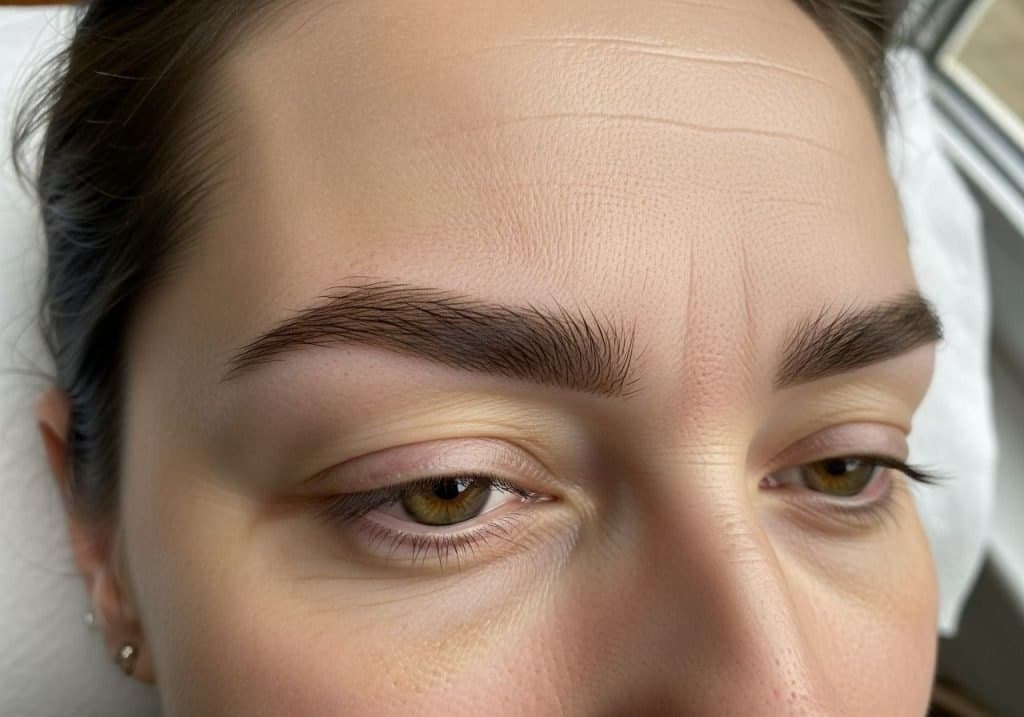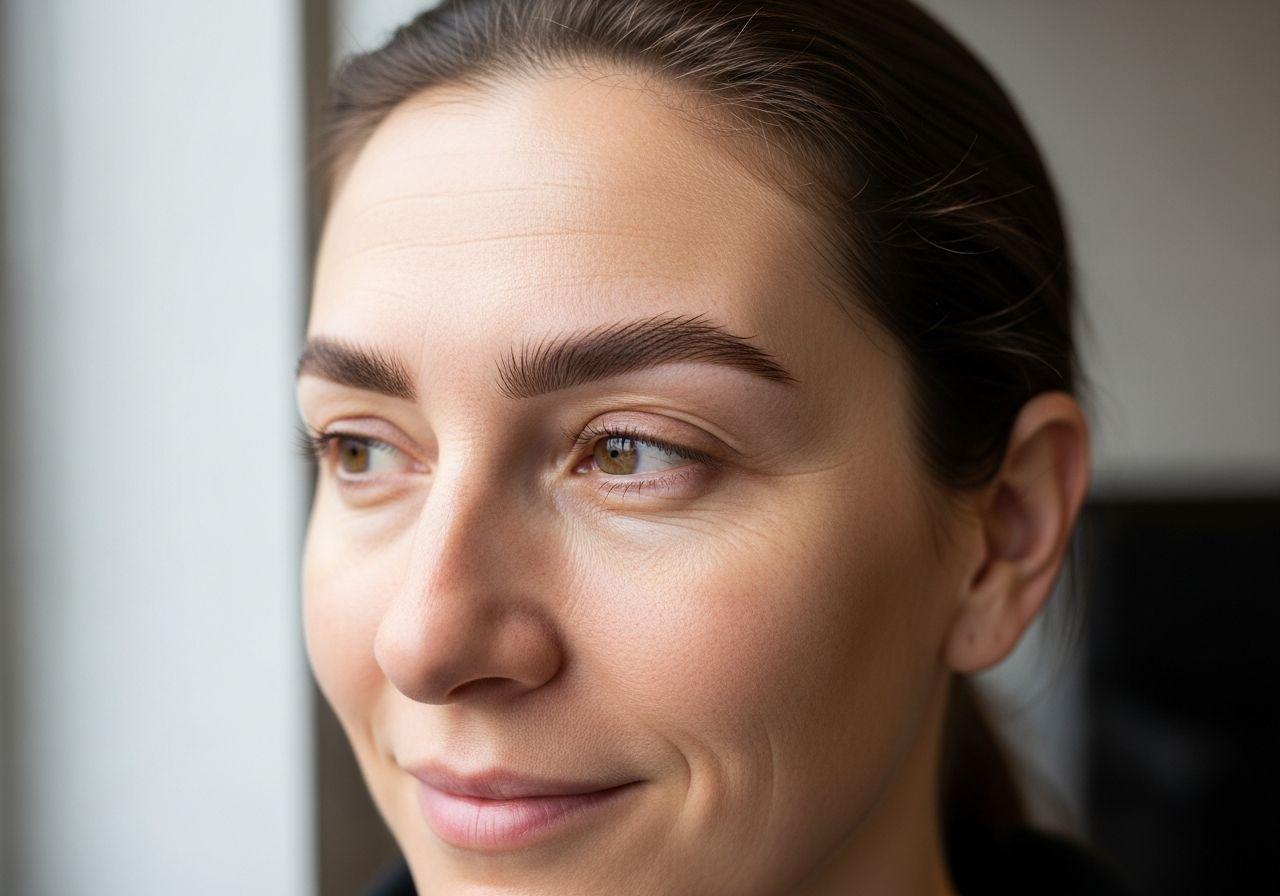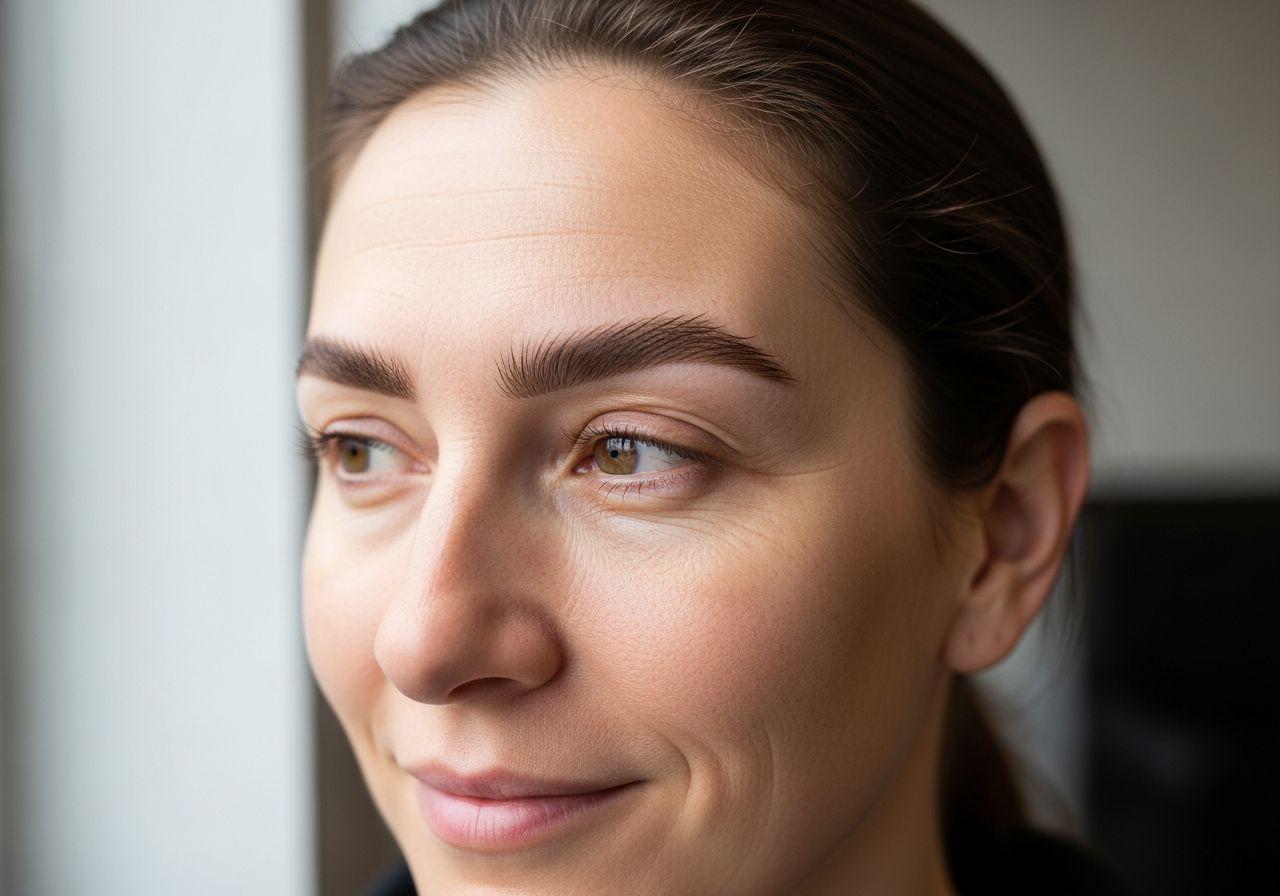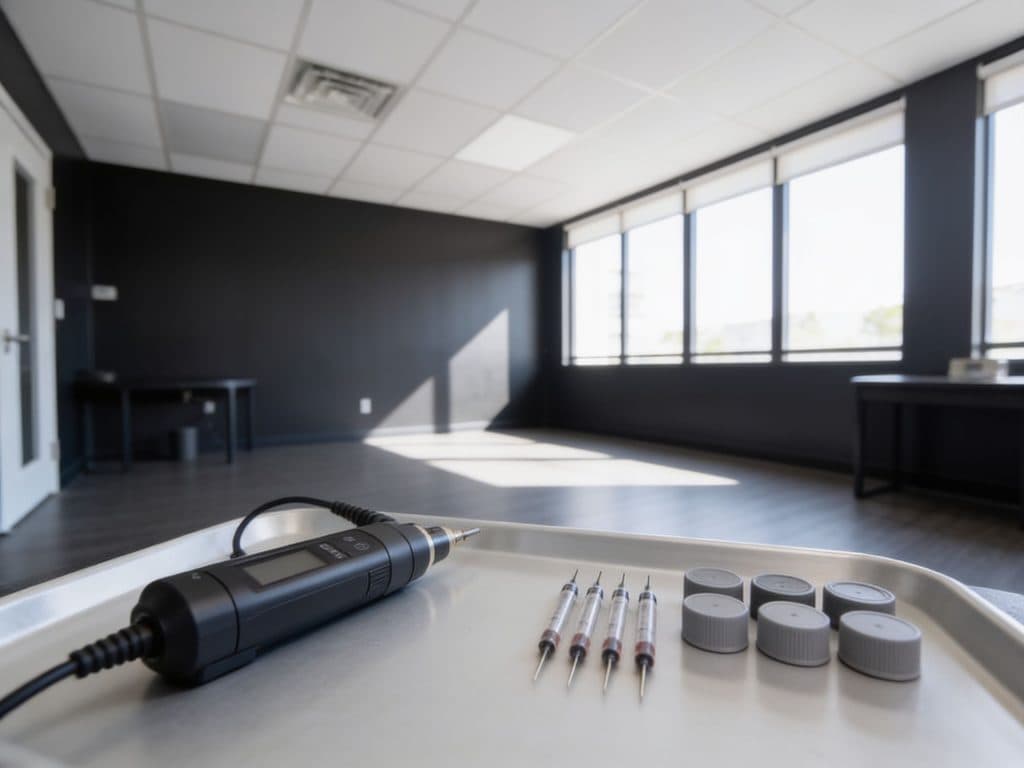

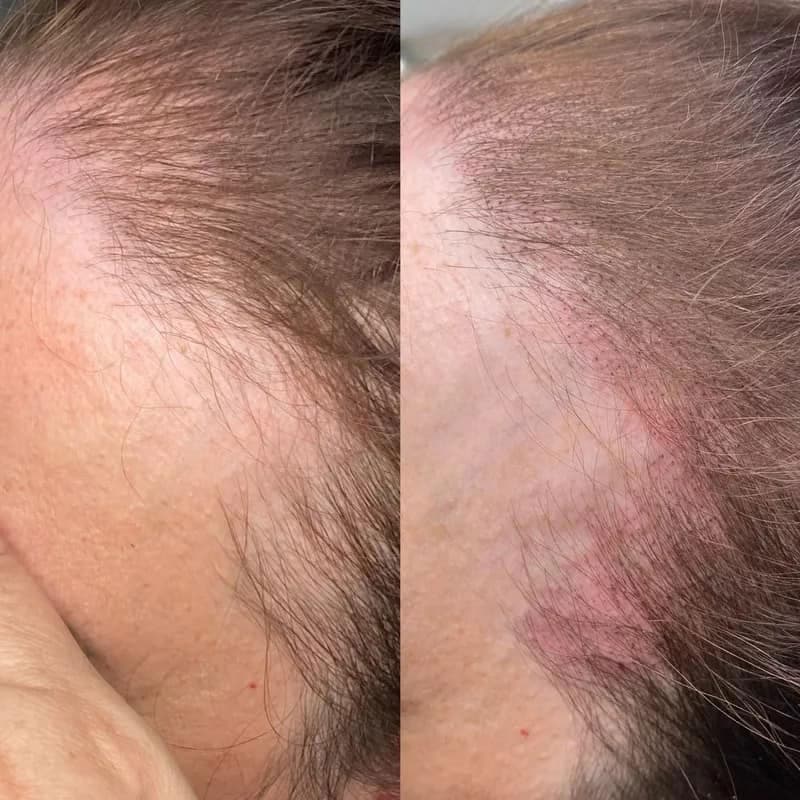

I design a natural-looking female SMP hairline by studying your existing growth pattern, facial proportions, hair color, skin tone and the way you wear your hair. I then create a soft, gently irregular edge and build pigment gradually, so the result blends with your own hair rather than looking drawn on.
Why is the hairline so important in female SMP?
When I plan scalp micropigmentation for women, I do not begin by choosing a template or drawing a straight line. The front of the scalp frames the face, so even a small change in shape, position or density can affect how natural the whole result appears.
Women can experience thinning at the temples, along the frontal hairline, around a parting, at the crown or across a wider area. These patterns need different approaches. A woman with existing hair usually needs pigment placed between her strands to reduce visible scalp, while someone with more extensive loss may need a more defined area rebuilt.
My aim is not to make every hairline look identical. It is to create a design that fits your features and works with the hair you still have. You can read more about my approach to scalp micropigmentation for women before arranging a consultation.
How do I map a female SMP hairline?
I begin by looking carefully at your natural hairline, any recession or thinning, the direction your hair grows and the areas where the scalp is most visible. I also consider your facial proportions, bone structure and the way you normally part, style or cover your hair.
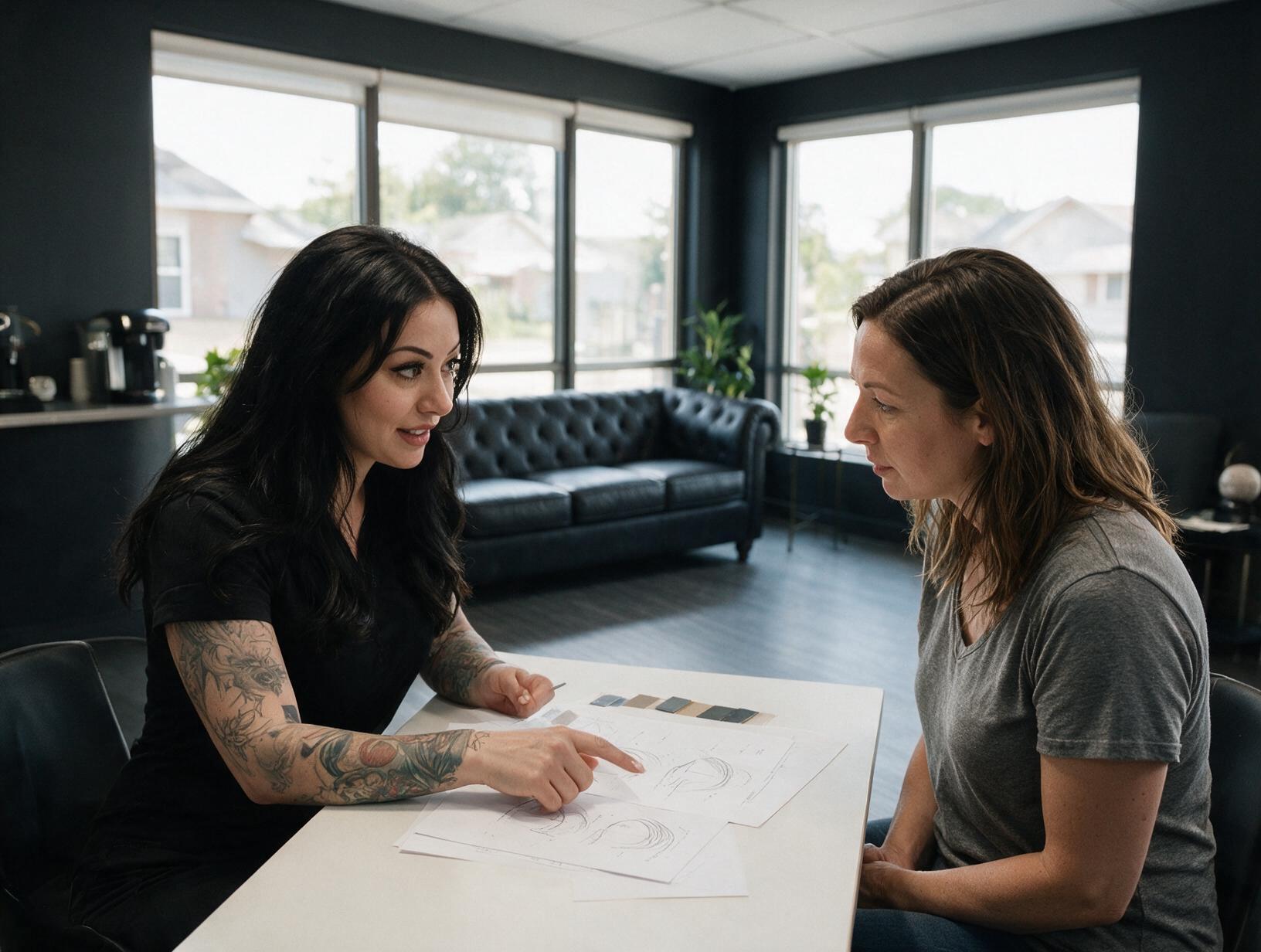
The proposed shape is discussed before treatment begins. I want you to see where the design sits and have the opportunity to talk through what feels right to you. A hairline that is placed too low, too even or too far forward can look artificial. Moving cautiously is especially important when we are blending pigment into existing hair rather than creating a standalone shaved style.
Natural hairlines are rarely perfectly straight. They usually have small variations in spacing, direction and softness. I use that principle when designing the front edge, while keeping the overall shape balanced. The result should look considered, not mechanically repeated.
What makes a female hairline different from a male SMP hairline?
Female hairline scalp micropigmentation is not simply a smaller version of male SMP. Many women are seeking visual density while keeping their existing hair, not a close-shaved appearance. That means I need to work around real strands and make the transition between treated and untreated areas discreet.
The shape also needs to suit the individual. A bold, sharply outlined hairline may be inappropriate for someone with diffuse thinning or a naturally soft frontal edge. I normally favour restraint at the boundary, with a gradual transition rather than an abrupt border.
Where the issue is traction-related thinning, temples may need particular care because the surrounding hair can be fine or uneven. Where the concern is a widening part or crown, the work may focus more on density than on rebuilding a front hairline. You can also explore my information about female hair density SMP if your main concern is scalp show-through rather than recession.
How do pigment color and density affect a natural-looking female hairline?
I assess your natural hair color, the depth of your existing hair and your skin tone before selecting a pigment approach. The goal is not to match a single strand of hair as though it were paint. The pigment needs to sit convincingly within the visual shadow of the hair and scalp.
Mixed-color or gray hair needs careful consideration. A single dark tone can look too strong when the surrounding hair contains lighter or gray strands. I take the overall appearance into account and work towards a balanced result rather than focusing on one isolated color.
Density is just as important as color. If every impression is placed with the same spacing and intensity, the scalp can look patterned. I vary the placement and build the appearance gradually, allowing the treated area to blend into your natural density.
For frontal thinning, temples or other visible areas, layering pigment over treatment sessions can give us more control than trying to create the full effect at once. It allows the design to be assessed as it develops and adjusted where needed.
What happens during the consultation and treatment?
At consultation, I ask about your hair loss pattern, how it has changed, your usual hairstyles and what you want the treatment to achieve. I also need to understand whether you are looking mainly for a softer hairline, more density, or camouflage of a specific area.
We discuss the proposed shape, the level of coverage and how the treatment will relate to your existing hair. I take time to consider the design carefully before treating. This planning stage is an important part of the treatment, not an administrative step.
During treatment, I use an anaesthetic to help with comfort. I place small pigment impressions in a controlled pattern, following the design and adapting to the hair and scalp in front of me. The exact process varies according to your starting point and the area being treated.
My practice is in Philadelphia, Pennsylvania. I am Tara Rebel, and I am AAM certified, a platinum level AAM trainer and instructor, New Jersey certified and insured. My background also includes an associate degree in education and a bachelor degree in psychology. I explain the pricing policy on the website rather than quoting figures in an article.
How can I decide whether this female SMP hairline design is right for me?
Bring photographs of hairstyles you wear regularly and be open about what you do not want. A design that looks attractive in an online photograph may not suit your face, hair pattern or preferred styling. I would rather create a modest, believable change than promise an exaggerated outline.
It is also useful to separate the problem you want to solve. If your concern is a receding front edge, the design discussion will focus on shape and transition. If your concern is diffuse thinning, parting visibility or crown show-through, the priority may be density blending. If you have a scalp scar, that is a different camouflage conversation, which I cover through my scalp scar camouflage with SMP service.
SMP can improve the visual appearance of density, but it does not recreate the texture or movement of growing hair. Good design works with that limitation by keeping the pigment subtle, following your natural pattern and avoiding a hard line that draws attention.
If you would like to discuss your hairline and whether female SMP is suitable, you can get in touch with Rebel Aesthetic to arrange a consultation.
Frequently asked questions
Can a female SMP hairline look natural when I still have hair?
Yes, the design can be created around your existing hair rather than replacing it with a new solid border. I place pigment between visible strands and soften the transition into untreated areas. The result depends on your starting density, hair pattern, skin and color, so I assess those details individually.
Will my female SMP hairline look like a painted line?
That is not the intended result. I avoid relying on a perfectly straight or uniformly dense edge. Small variations in spacing and a gradual transition help the work resemble natural follicle distribution. The design is reviewed before treatment so we can address any concern about shape or placement.
Can SMP help if traction alopecia has affected my hairline?
It may help improve the appearance of visible thinning at the front or temples, depending on the condition of the area and your remaining hair. Traction-related loss needs careful planning because the hairline can be uneven. I assess the scalp and discuss suitable coverage during consultation.
Can women with gray or mixed-color hair have SMP?
Gray or mixed-color hair does not automatically prevent treatment. I consider the overall tone of your hair, the scalp shadow and your skin tone rather than matching one dark strand. The pigment approach needs to remain subtle enough to blend with the colors already present.
Does the hair need to be shaved for female SMP hairline design?
Not necessarily. Female density treatments are planned around existing hair, because the purpose is to reduce visible scalp between strands. Whether any trimming is helpful depends on the area, the length and the treatment plan. I explain what is practical for your specific pattern before starting.
How do I know whether I need hairline SMP or density SMP?
Think about where the scalp is most visible. If the main concern is recession or a weakened front edge, hairline design may be central. If the issue is a widening part, crown show-through or general thinning, density work may be more appropriate. Some treatment plans combine both approaches.