


An inner lip tattoo is technically possible, but it usually does not last as long or behave as predictably as permanent makeup on the visible lip. The inside of the mouth is constantly exposed to moisture, friction, food and natural tissue turnover, so pigment can fade quickly. I assess your goal and recommend the most suitable option at consultation.
What is an inner lip tattoo?
When people ask about an inner lip tattoo, they usually mean pigment placed on the moist tissue inside the lower or upper lip, rather than color applied to the visible lip. This is different from permanent lip makeup, which is designed to enhance the visible vermilion, the colored part of the lip.
The inside of the lip is a challenging place for pigment. It is constantly wet, moves when you speak and eat, and comes into contact with saliva, drinks and food. The tissue also renews itself quickly. Those factors make an inside lip tattoo less predictable than a visible lip tattoo.
So, is an inside lip tattoo possible? In a technical sense, pigment can be placed there. However, possible does not mean that it is the right choice for every person or that the result will last in a consistent way. I would want to understand whether you are looking for a private novelty tattoo, visible color, lip definition or correction before discussing any procedure.
At Rebel Aesthetic, I offer lip tattoo treatments for the visible lips. You can read more about permanent lip cosmetic treatments before deciding which direction feels right for you.
How long does an inner lip tattoo last?
There is no dependable fixed lifespan for an inner lip tattoo. In my experience it often fades sooner than a tattoo on ordinary skin because the oral tissue is exposed to constant moisture, movement and friction. Some pigment may soften or disappear relatively quickly, while some color can remain unevenly. The result depends on the individual, the pigment, the placement and how the tissue heals.
This is why I would not promise that an inside lip tattoo will last for a particular number of months or years. A result can also appear to change as the tissue heals. Fresh pigment may look stronger at first, then become lighter and less defined. If the color fades in patches, adding more pigment does not necessarily create a clean or predictable result.
By comparison, visible permanent lip makeup is designed to fade gradually over time. A healed result can often remain noticeable for one to three years before a color refresh is considered, although that varies with skin type, lifestyle, technique and aftercare. Your result may need attention sooner if your skin is oilier, you have considerable sun exposure, or you use products that encourage faster fading.
Why does an inner lip tattoo fade so quickly?
The main reason is the environment. The inside of the mouth is not a dry, stable surface. Saliva is present throughout the day, and the tissue stretches and folds as you talk, chew and smile. Food, drinks and contact between the lips and teeth add further friction.
Natural cell turnover also matters. As the surface tissue renews, pigment can be lost more rapidly than it would be from a more stable area of skin. Healing may therefore be less predictable, with the final color looking softer, patchier or simply less visible than expected.
With any cosmetic tattooing, the way your body retains pigment is individual. Skin type, immune response, sun exposure, skincare and aftercare can all influence fading. For an inner lip tattoo, the constant oral environment adds another important variable.
There are also practical safety considerations whenever a procedure is considered near or inside the mouth. I would need to discuss your health history, medications, healing history and expectations before advising you. If the area is irritated, inflamed or otherwise unsuitable, treatment should not go ahead.
What is the difference between an inner lip tattoo and lip tattooing?
A visible lip tattoo, often called lip blush or permanent lip color, places pigment in the visible lip to create a softer, more even tone. Depending on your goals, the result may be a subtle tint, stronger color or correction of uneven pigmentation. It is not the same as placing color on the inner lip.
Visible lip treatments still fade because permanent makeup is designed to soften over time. However, the treatment area is assessed as facial skin, and I can consider your natural lip color, border, symmetry and the finish you want. The technique can then be planned around a wearable result rather than a private mark that may disappear unpredictably.
Some people want more shape rather than more color. In that situation, I may discuss a softer lip treatment instead of trying to create a hard outline. The right choice depends on your natural lip shape, existing pigmentation and whether you want a subtle enhancement or a more saturated finish.
If you are weighing up techniques, my guide to lip blush, full color and liner options explains how the approaches differ and what each is intended to achieve.
What should I expect if I choose visible permanent lip makeup?
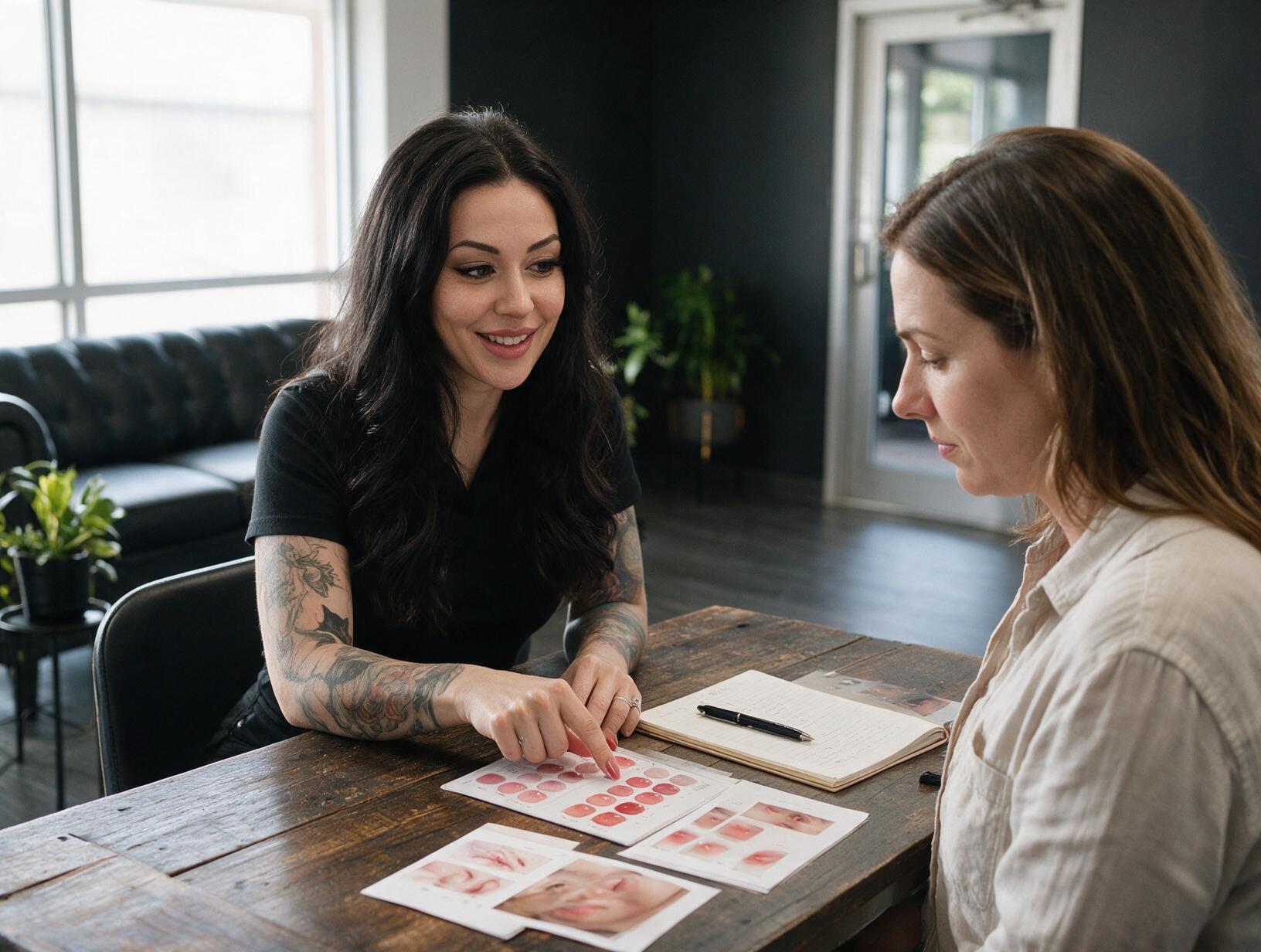
Before treatment, I assess your lips and discuss the color, shape and level of definition you want. I also explain what the treatment can and cannot do. Numbing is used to help keep you comfortable.
Immediately after a visible lip treatment, the color can look stronger and more saturated than the healed result. This is normal. During healing, the color softens as the skin settles. The lips may feel tender, tight or sensitive for a short period, and the healing process takes time.
A follow-up or perfecting session is commonly considered after the initial healing period. This allows me to assess how evenly the pigment has settled and whether any areas need refinement. I do not judge the final color while the lips are still fresh or actively healing.
Aftercare matters. I will give you instructions for caring for the area, and you should follow them rather than picking or removing any flaking skin. Sun exposure can fade cosmetic pigment, so protecting healed lips from prolonged sun is sensible. Smoking may also affect how long color looks fresh.
You can read what to expect in my lip tattoo healing timeline before booking, especially if you need to plan around work, social events or travel.
Is an inner lip tattoo right for you?
I would be cautious about choosing an inner lip tattoo if your main aim is long-lasting visible color or reliable lip definition. The location does not offer the same predictability as visible permanent lip makeup, and fading can be difficult to forecast.
A consultation is the best way to clarify what you actually want. If you want a private novelty mark, we can discuss the limitations and whether the risks and maintenance are acceptable to you. If you want your lips to look more even, defined or colored day to day, a visible permanent lip treatment may be a more appropriate conversation.
I am Tara Rebel, owner of Rebel Aesthetic. I am American Academy of Micropigmentation certified, a platinum-level AAM trainer and instructor, New Jersey certified and insured. I provide permanent makeup at Rebel Aesthetic in Philadelphia, Pennsylvania, and will give you straightforward guidance.
To discuss your options, please get in touch with Rebel Aesthetic for a consultation.
Frequently asked questions
Can an inner lip tattoo be removed?
Removal can be difficult, particularly in delicate oral tissue, and it should not be assumed that every trace of pigment can be removed cleanly. Do not choose an inner lip tattoo expecting an easy reversal. If you already have one you dislike, seek an assessment from a suitably qualified professional before considering further treatment.
Will an inner lip tattoo hurt?
Sensitivity varies from person to person, and the inside of the lip is a delicate, highly mobile area. Pain, tenderness and swelling are possible. I would discuss comfort measures and your health history before any treatment. Never use a numbing product inside the mouth unless it has been specifically advised as suitable for that use.
Can I eat normally after an inside lip tattoo?
You may need to adjust eating and drinking while the area is sensitive and healing. The exact advice depends on the treatment, placement and your individual response. Your practitioner should provide clear aftercare instructions, including what to avoid and when normal activities can resume.
Does an inner lip tattoo turn blue or green?
Color changes are not predictable enough to promise a particular healed shade, especially in a difficult area such as the inner lip. Pigment can fade unevenly or look different as it heals. A consultation should cover the proposed pigment, expected softening and the possibility that the result may not remain even.
Can I get an inner lip tattoo if I have cold sores?
A history of cold sores is important to disclose before any lip procedure. Trauma to the lips can be relevant for people prone to outbreaks, so your practitioner may advise medical guidance or postponement. Do not conceal your history, medication or current symptoms during consultation.
Is an inner lip tattoo the same as lip blush?
No. An inner lip tattoo places pigment on the moist tissue inside the mouth. Lip blush is permanent makeup applied to the visible lips to create a softer, more even tint. The areas, techniques, healing conditions and expected longevity are different, so they should not be treated as interchangeable terms.